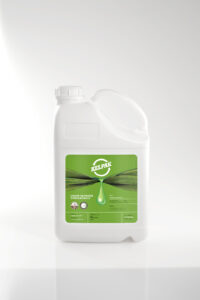
Since 1978, Kelpak has transformed sustainably harvested kelp into a science-backed biostimulant, delivering consistent, resilient crop performance worldwide.
DES MOINES, IA, UNITED STATES, February 16, 2026 /EINPresswire.com/ — Kelpak, the flagship liquid seaweed concentrate, was established in 1978 with a simple idea that still guides the company today. This entails respecting the biology, validating the benefits, and delivering consistency that farmers across the world can rely on.
The product’s foundation is found just offshore along South Africa’s Atlantic coast, where Ecklonia maxima kelp thrives in the cold, nutrient-rich Benguela Current. Early work by a small multidisciplinary team led to the development of the Cold Cellburst extraction method using pressure differentials rather than heat or harsh chemicals to gently rupture cells and preserve native bioactives, setting Kelpak’s scientific and sustainability foundations in place.
From harvesting through to finished goods, the process has been engineered around quality. Kelp is hand-harvested within authorised coastal concessions, moved rapidly to the nearby production facility to preserve bioactivity, and extracted using Kelpak’s proprietary, low-impact process. The approach aims to protect product integrity and ocean ecosystems.
“Since our beginnings, our focus has been to understand the biology and design our technology around it,” says Steven van Rheede, Managing Director, Kelp Products. “Cold Cellburst was only the first step. This matters just as much is the discipline to keep the chain intact, from ethical harvesting and fast, fresh handling through to controlled extraction and batch-level quality checks.”
“Our job is to make the biology reliable for farmers,” says van Rheede. “That means proven process, verifiable quality and technical guidance that respects the realities of each crop and region.”
Today Kelpak supports growers across a spectrum of crops where consistent physiological responses are monitored for stronger root architecture, balanced vegetative growth, improved pollination efficiency and fruit retention, and enhanced resilience to abiotic stresses such as heat or salinity. These outcomes have been investigated over decades in collaboration with university partners1 and independent researchers and are reflected in the product’s adoption across diverse production systems.
“From day one we built around sustainability and repeatability,” adds van Rheede. “The structure is intentional with hand-harvesting within strict quotas, rapid movement of biomass, and an extraction method that avoids heat and aggressive chemicals. It’s how we protect ocean health and product performance in the field.”
The company’s growth has followed a steady arc. After South African validation and early exports in the 1980s and 1990s, Kelpak expanded its presence across new markets through the 2000s and 2010s, adding logistics capacity and commissioning an advanced research laboratory to ensure quality and consistency on crops.
Kelpak has been in the North American market for more than two decades and continues to be the benchmark for seaweed based products. “Our aim is to continue bringing this premium and differentiated product to the USA market”, says Carlo Botha, Managing Director of Kelp Products International and Kelp Products USA.
“With presence through our ever expanding trusted distributor network throughout the United States and Canada, we are here to optimally serve our partners and ultimately the grower, showcasing what Kelpak can do for their crop”, Botha adds.
Ecklonia maxima forests along South Africa’s west coast are a renewable natural resource when managed carefully. By aligning harvest to ecosystem health, maintaining rest periods, and moving fresh biomass swiftly into extraction, Kelp Products seeks to preserve the full bioactive profile that the Cold Cellburst process is designed to retain. The result is a kelp extract that can be integrated into modern programmes alongside nutrition, crop protection and irrigation strategies.
Looking ahead, the company is investing in capacity, research and customer support. A modernised production base near the coast was established to handle rising demand while reducing handling time. A global logistics hub supports channel partners and dedicated laboratories help verify batch quality and inform application guidance. Plans include a Global Research and Innovation Centre to deepen the link between kelp biology and practical field outcomes and to explore adjacent opportunities in sustainable plant health.
“Biological inputs are most valuable when they are consistent and well-understood,” van Rheede concludes. “Our responsibility is to keep that promise (science-first, quality-first) so growers can make informed decisions with confidence.”
Sonja Knoesen
Hatch Communication
email us here
Visit us on social media:
LinkedIn
Instagram
Facebook
X
Legal Disclaimer:
EIN Presswire provides this news content “as is” without warranty of any kind. We do not accept any responsibility or liability
for the accuracy, content, images, videos, licenses, completeness, legality, or reliability of the information contained in this
article. If you have any complaints or copyright issues related to this article, kindly contact the author above.